
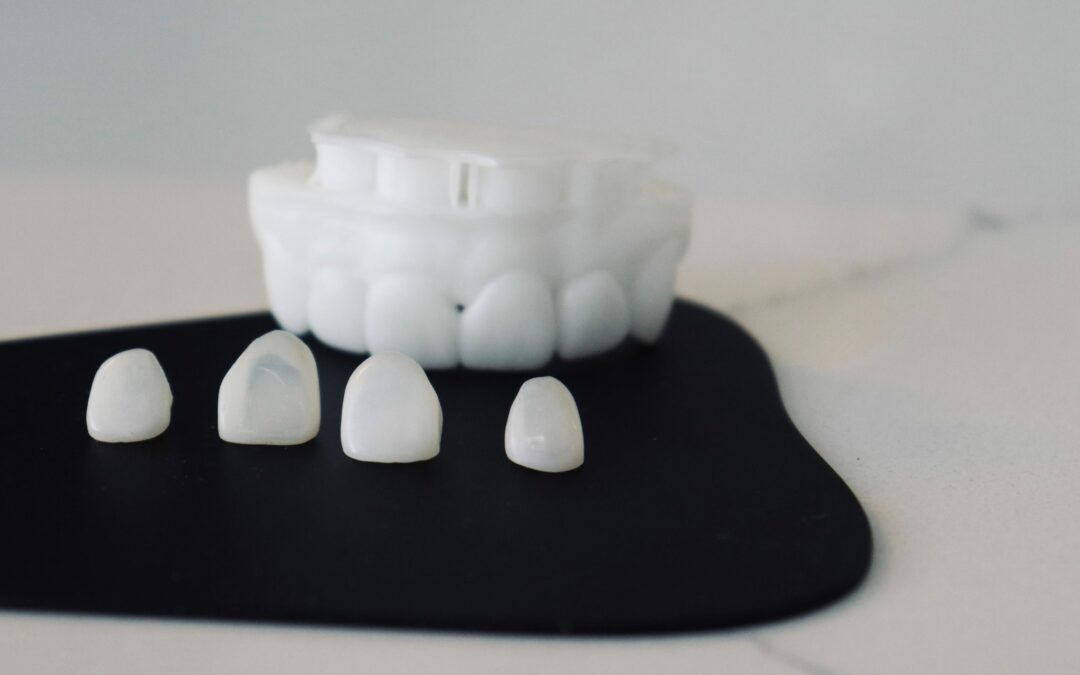
When it’s time to repair or enhance your smile, two of the most common treatments recommended by dentists are veneers and crowns. Because both crowns and veneers can dramatically improve the aesthetics and function of your teeth, many patients assume they are interchangeable. However, while they share the goal of a beautiful smile, the technology and clinical applications behind crowns vs. veneers are quite different.
To help you navigate your dental journey, read through to learn how veneers and crowns work, the differences between crowns and veneers, and how to determine which method is best for your specific needs.
Understanding Porcelain Veneers
What are veneers? Dental veneers are ultra-thin shells crafted from high-quality, stain-resistant dental porcelain. Typically measuring only about one millimeter in thickness, veneers are considered a minimally invasive cosmetic dentistry option. Because they are so thin, the procedure allows you to keep the majority of your natural tooth structure intact.
Now, let’s discuss veneer preparation and application. To prepare a tooth for a veneer, a dentist will gently buff away approximately half a millimeter of enamel from the front surface. This creates a slightly rough texture that allows the dental cement to create a permanent, secure bond. It is important to remember that veneers are primarily a surface-level solution; they require a healthy amount of existing enamel to be successful.
The Role of Dental Crowns
Unlike a veneer, which only covers the visible front of a tooth, a dental crown is a “cap” that completely encases the entire tooth down to the gum line. Because the crown is thicker—usually around two millimeters—more of the natural tooth must be reshaped or “tapered” to allow the crown to fit snugly over it.
Crowns are the gold standard for restoring teeth that have suffered significant structural damage. Whether a tooth has been compromised by deep decay, a large fracture, or a root canal, a crown provides the reinforcement needed to withstand the pressure of chewing. These restorations can be made from all porcelain, porcelain-fused-to-metal (PFM), or gold alloys, depending on the location of the tooth and the patient’s aesthetic goals.
Where Veneers and Crowns Overlap
Despite their structural differences, veneers and crowns share several key similarities. Both treatments are designed to improve the color, shape, and alignment of your teeth. Modern dental labs can match the shade of your veneer or crown to your surrounding teeth so perfectly that, once placed, it is nearly impossible to tell the difference between the two.
Additionally, long-term care for veneers and crowns is similar. Neither requires “special” cleaners; you simply maintain a consistent routine of brushing twice a day and flossing daily. Regular professional cleanings and check-ups remain essential to ensure the underlying tooth and the surrounding gum tissue stay healthy.
Which Looks More Natural? Veneers or Crowns?
When it comes to the “social six”—the front teeth that show most when you smile—aesthetics are everything. A porcelain veneer is often considered the most aesthetically pleasing option because it is bonded only to the front surface, showing less of a margin at the gum line. This creates a seamless, translucent look that mimics natural enamel.
Dental crowns, while still very natural-looking, are slightly thicker. They are best used when a tooth is heavily discolored, heavily filled, or structurally weakened, as they can completely hide the underlying tooth while still matching your surrounding teeth perfectly.
How Long Do Veneers and Crowns Last?
Durability is a major factor when choosing your restoration. Porcelain veneers typically have a lifespan of 10 to 15 years, however that depends on the dental care routine of the patient. This should include excellent home hygiene and routine dental visits to ensure a maximum lifespan for the veneer. Over time, they may need to be replaced due to natural wear, chipping, or changes in the gum line.
In contrast, dental crowns are built for the long haul. Because they encase the entire tooth and are made of thicker materials, a well-maintained crown can often last several decades, and in many cases, a lifetime. While crowns are more of a permanent commitment, they offer a level of structural integrity that a thin veneer simply cannot provide.
How Much Do Veneers and Crowns Cost?
In 2026, the cost of dental restorations reflects the advanced materials and 3D imaging technology used to create them. Porcelain veneers generally range from $925 to $2,500 per tooth. Because veneers are classified as a cosmetic procedure, they are rarely covered by dental insurance.
Dental crowns typically fall between $1,000 and $3,500 per tooth. However, because crowns are often medically necessary to save a tooth from extraction or further decay, many insurance providers will cover a significant portion of the cost. To make these treatments more accessible, most dental practices offer flexible payment plans to help patients manage out-of-pocket expenses.
Making the Right Choice for Your Health
So, which one is right for you? The answer depends on the current state of your dental health. If your teeth are structurally healthy and your goals are purely cosmetic—such as whitening or fixing a small chip—porcelain veneers are likely the best path. They offer a transformative look with minimal alteration to your natural teeth.
However, if a tooth has a large filling, has become brittle after a root canal, or is severely worn down, a crown is the necessary choice. It acts as a protective shield, preventing the tooth from breaking further while restoring its full biting power. Your dentist will conduct a thorough examination to recommend the option that ensures both beauty and long-term health.
Expert Restorative Dental Care in Knoxville, TN
If you are ready to address damaged or discolored teeth, the team at University General Dentists is here to guide you. Our experienced clinicians specialize in both restorative and cosmetic dentistry, ensuring that whether you receive a crown or a set of veneers, the result will look natural and feel comfortable.
We offer comprehensive treatment plans tailored to your unique smile goals. Contact us today at one of our two convenient Knoxville locations to schedule your consultation. Reach our University of Tennessee Medical Center office at 865-305-9440 or our West Knoxville office at 865-500-5700.